The Beginning of the Two-Nation Theory in Sindh and UP
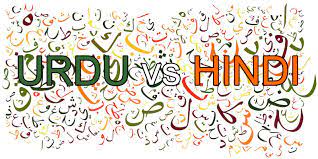
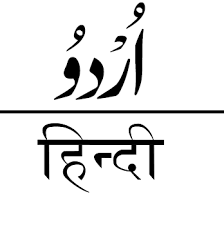
The Urdu–Hindi Script Controversy
In 1837, the British declared Urdu the official language. However, after the 1857 uprising, the British grew hostile toward Muslims, and within just ten years the Hindus took advantage of the situation to win the favor of the colonial rulers.
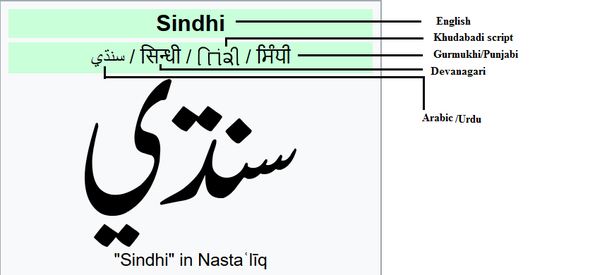
In 1867, in Banaras, when a proposal was made to adopt Urdu (in the Persian–Arabic script) as the official language, the Hindu elite labeled Urdu as the “language of the Muslims” and demanded that it be abolished and replaced with Hindi (in the Devanagari script). Since the Muslims were in a minority and the Hindus applied immense pressure, the British decided to recognize both Devanagari and Arabic scripts. The Muslims, however, perceived this as an attack on their culture and religion. It was in this context that Sir Syed Ahmad Khan declared, “Hindus and Muslims are two separate nations.”
The Sindhi Script Controversy
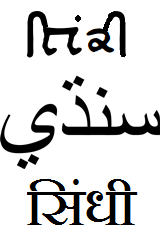
After the British conquest of Sindh in 1843, the issue of language and script arose in government offices. Before British rule, Persian was traditionally the official language in Sindh, although at the popular level Sindhi was written in the Arabic script.
The Hindu baniya (trading and clerical) class, which dominated trade and administrative work, wanted Devanagari script to be introduced officially. In 1853, the German linguist Richard Burton gave a ruling in favor of the Arabic script. However, this decision created a rift in Hindu–Muslim relations, as the Hindu community continued to press for Devanagari. Historical records may not clearly mention the names of Muslim leaders who resisted this move, but it is certain that they strongly defended their position. Some British officers even favored Urdu, since officers and soldiers in North India already used it. But Sindh’s Muslim scholars and elite insisted that Sindhi was the true language of the people and therefore should remain the official medium.
Common Ground Between Sindh and UP
Although the language controversies in Sindh and UP were unrelated, both events demonstrated a shared reality: if the Muslims of UP wished to preserve their religious identity, so too did the Muslims of Sindh. Otherwise, the script itself was not inherently of such great importance. Even today, Muslims in Europe acquire Islamic education in European languages without threatening their faith. If Sindhi or Urdu had been written in Devanagari, it would not have been catastrophic. Yet, both these communities—though geographically distant—insisted on maintaining the Arabic or Persian script as a marker of their identity.
Another significant point is that Sindhi-speaking Muslims, by virtue of being the majority, not only prevailed over the Hindu Sindhis but also succeeded in securing a distinct identity for the Sindh Division, even though it was administratively a part of Bombay. This distinct identity later paved the way for Sindh’s separation from Bombay. In this matter, the role of UP’s Muslims also carried great importance, as their support for the All-India Muslim League’s campaign for Sindh’s provincial status ensured its success. Without this effort, Sindh might never have been separated from Bombay, and it is not inconceivable that—due to administrative reasons—it could even have been merged into Punjab, as some voices had suggested at the time of Sindh’s conquest.
The Political Mindset of UP Muslims
Finally, the third and most important point: although Muslims in UP were a minority, they were part of India’s largest and most important province. Despite comprising only 15% of the population, through their leadership qualities they not only refused to submit to Hindu domination but also succeeded in asserting their equal political weight. This temperament of UP’s Muslims would go on to influence the politics of the subcontinent in the years to come.
The continuation of this discussion will, God willing, be linked to the language bill during Bhutto’s era, but for today, this much is enough.
Nadeem Rizvi
Matrooka Sindh Tehreek & Muhajir Qaumi Tehreek