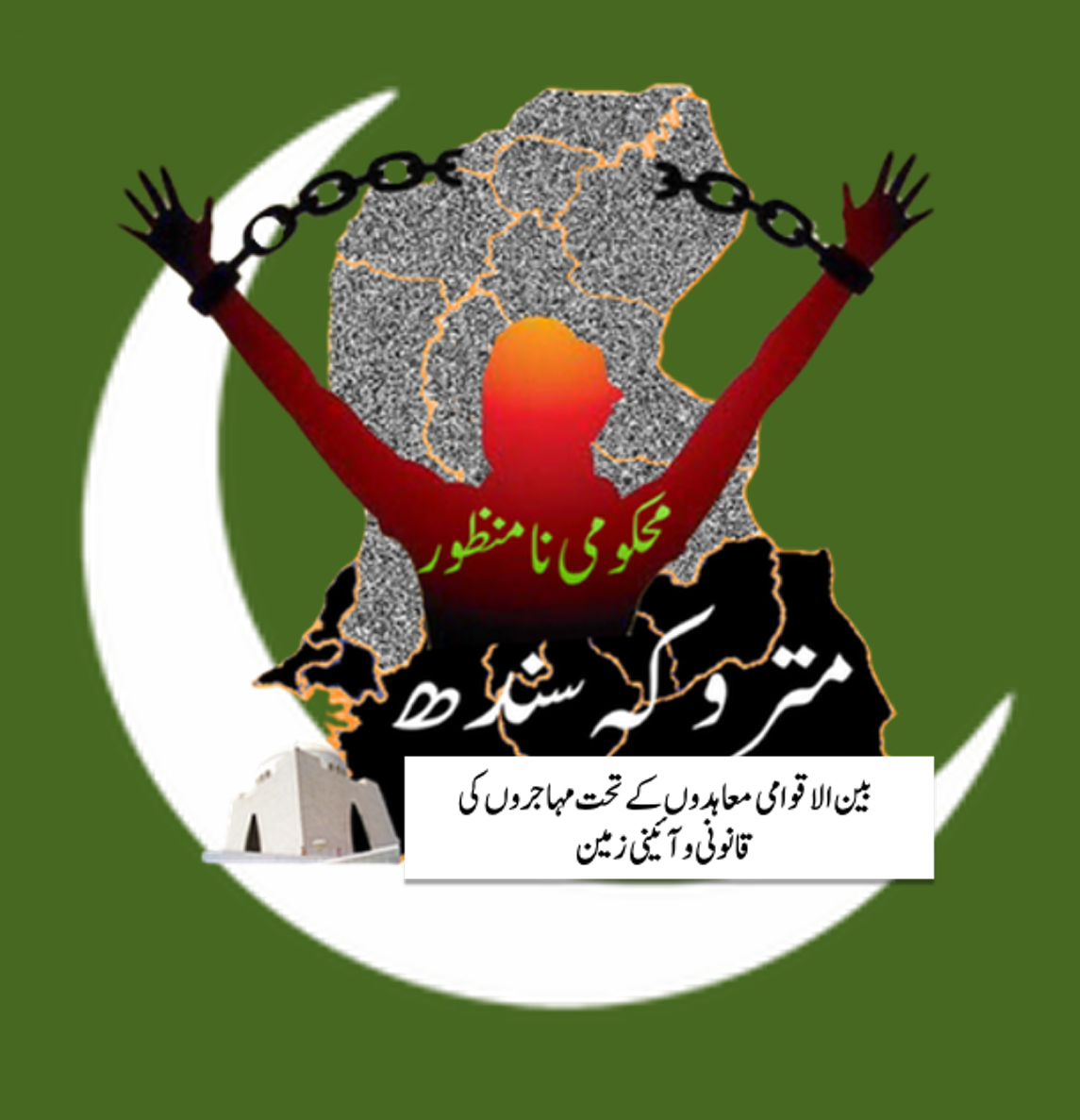
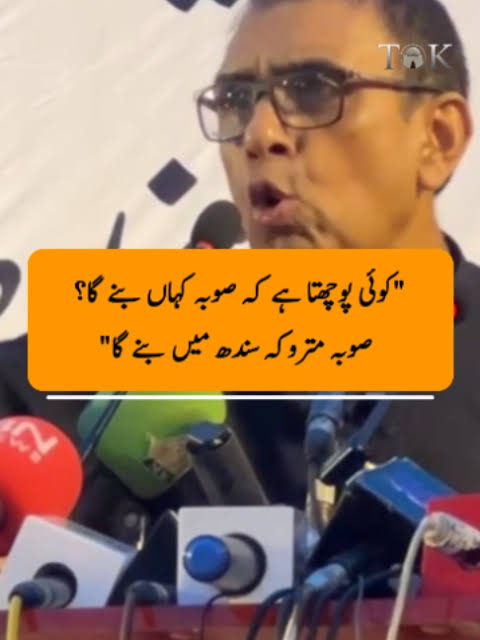
A nation is a people with a language, a common memory, a way of life they can pass on, and a piece of earth they hold together. Blood myths are optional. The Urdu-speaking Muhajirs of urban Sindh meet the test. They are not lodgers on another nation’s soil. They are a people who exchanged lands and their land is MatrukaSindh.
What “homeland” means here
MatrukaSindh is the land the Pakistani state took from those who left for India from Sindh and allotted them to house those who arrived from India. The legal forms were individual: claims may be verified false fabricated does not matter to those woh were not even entitled to claim. House or field allotted, a transfer deed signed. The outcome was collective. Karachi, Hyderabad, and Sukkur were remade. By 1951, migrants were the majority in those cities. Schools, presses, markets, and neighborhoods rose in distinct culture which belonged to Muhajirs. Children were born who had never seen Lucknow or Patna. People who buried their dead in a city and raises a third generation there are not passing through.
Punjab’s refugees also received plots. No one calls them guests in Punjab. The only difference is speech. In Punjab the incoming tongue already matched the countryside. In Sindh it remade the city.
The 1936 province of Sindh was cut from Bombay so a Muslim-majority unit could stand alone. The 1943 Sindh Assembly resolution spoke of the Muslims of India as a nation entitled to states where they were numerous. Urban Sindh after 1947 is where one large branch of that muslim nation still stands. Matruka Sindh is the ground that resolution left behind.
A title deed is not a theory of the province. It is also not a room key. The state did not resettle a handful of clerks. It transferred a civic world.

Language and culture
Urdu is not a borrowed official language in these cities. It is the language of the home, the school, the newspaper, the court, and the vote. The Pakistan demand was written and argued in it. Three generations have now thought in it on the same streets. A language that does that work is a national language of that people, whether or not a provincial statute agrees.
Culture follows. Muhajir city life is not rural Sindh in a different dress, and it is not a frozen copy of old Lucknow. It is the culture of the Muhajir city: schooling as honour, the mohalla and the flat, the professional class, a relatively open social tone, and a story of migration told as a price paid for a Muslim state. That culture can live beside Sindhi neighbors. It cannot be ordered to dissolve as the rent for staying.
To call Muhajir “Urdu-speaking Sindhis” is to confuse a map with a people. Sharing a province is federation. It is not the same thing as being one nation.
How the name arrived
The first banner was Muslim. Men and women left India as Muslims who had been told that faith and politics were one claim. They helped build the early state because they had the skills the new capital needed. Then the provinces discovered language. Sindh discovered Sindhi. Quota rules and the 1972 language conflict taught the Muhajir street that “Muslim” was no longer enough. The local majority would now count dialect and origin.
A people so taught can accept permanent junior rank, or they can name themselves. The name came in the late 1970s and 1980s because the wound came then. Late is not false. Bengali statehood was late. So was every modern nation that began as a political public rather than a tribe. Muhajir names that public: Deccani, Bihari, UP family, artisan and ashraf, fused by the same cities and the same refusal to vanish.
This is not a guest asking to enter an old nation. It is a constituent people of Pakistan standing on land the same state reserved for their rehabilitation, in numbers that rebuilt the cities.
The point
If nationhood is land, language, a public culture, and a will to remain, the Muhajirs have it.
Matruka Sindh is the land: not every acre of the old province, but the urban and allotted Sindh on which this people actually lives.
Urdu is the language: not a federal courtesy, the mother tongue.
The Muhajir way of living is the culture.
The street and the vote since the 1980s are the will.
The claim is not to take Larkana. It is to stop being described as a camp on someone else’s nation. A federation that can hold two peoples on one soil will treat MatrukaSindh as a homeland among homelands. A politics that cannot will keep colliding with a people who have a language, a graveyard, and nowhere else to go.
Dr Nadeem Rizvi
MatrukaSindh Tehreek