
From time to time, the notion of creating new provinces in Pakistan not only arises but is used by shortsighted politicians fuel their political agenda. The Muttahida Qaumi Movement (MQM) has repeatedly raised demands for the creation of additional provinces within Sindh, and in the past, MQM’s current paper-chairman Dr. Khalid Maqbool Siddiqui has even declared, “The province has already been created, only the announcement remains.” Just last week, a similar statement was issued by Dr. Farooq Sattar, whose political stature is quite small even within his own party.
We know well that MQM’s roots are not among the people, nor does it have more than a puppet’s status in Pakistan’s political game. Yet these hollow, so-called leaders’ statements needlessly incite the naïve among the Muhajir community of Muttaruka Sindh, and in response, Sindhi-speaking nationalists hurl a storm of abuse, setting aside all love, efforts, and concessions extended by the Muhajir nation.
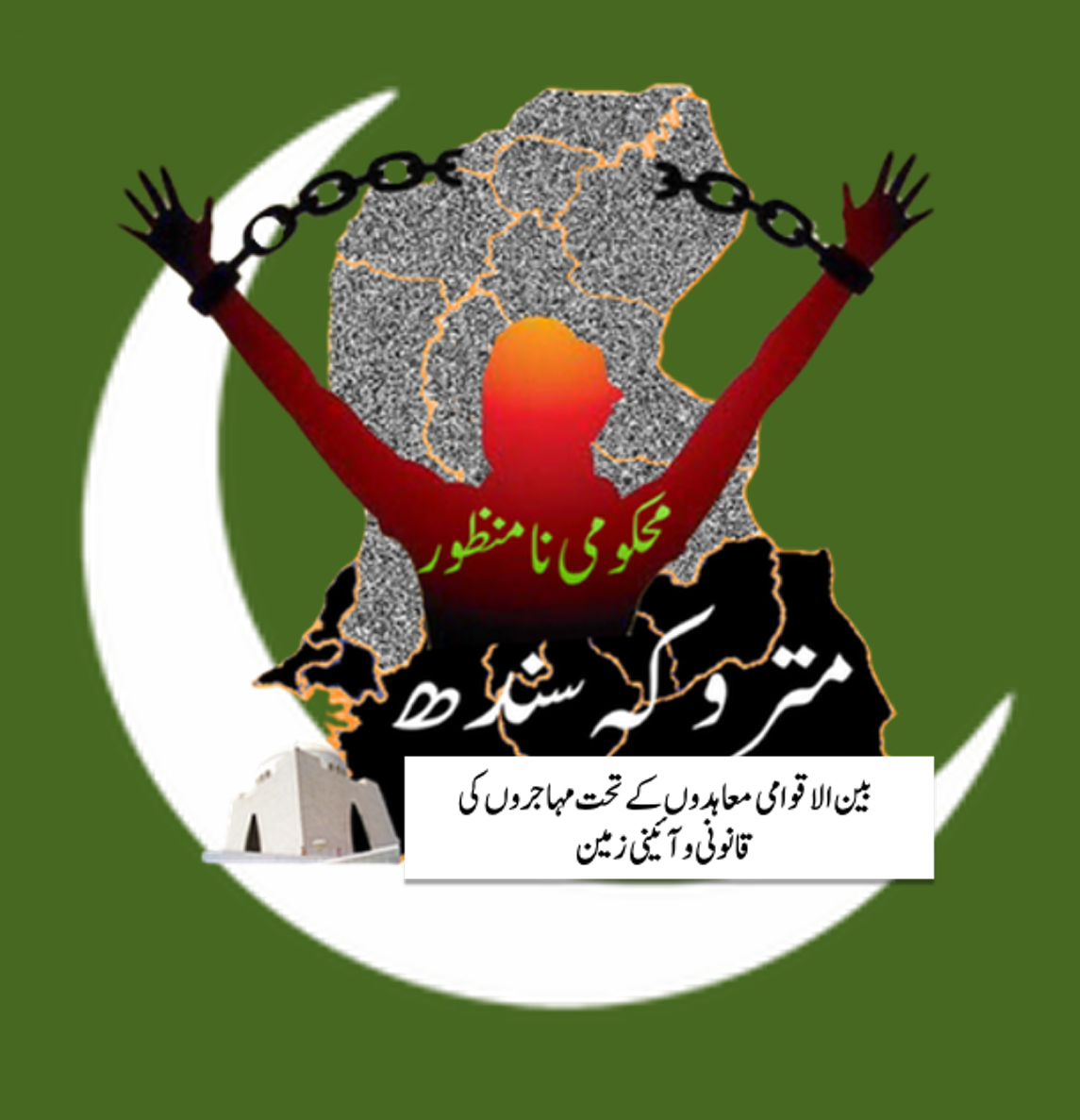
The Mutruka Sindh Movement stands far away from such political theatrics and puppet shows. It is a movement of ideological boundaries’ guardianship for Muhajir nationalism, working with the resolve to protect the Muhajir nation from MQM’s hypocritical and self-serving political somersaults. The Mutruka Sindh and Muhajir National Movement not only exposes MQM’s forty years of political flip-flops but also provides ideological guidance to the Muhajir nation on every issue, large or small.
While MQM fiercely opposed the Muhajir Culture Day for four years, the Muttaruka Sindh Movement supported it from day one — because we know that without culture, there is no nation. Likewise, when Muhajir leaderships remain silent, hypocritical, or foolish on the issue of Muhajir land — Mutruka Sindh — Nadeem Rizvi steps in to correct and clarify, so that the world does not misunderstand the ideology of Mutruka Sindh because of these leaders.
Now, on the matter of creating provinces: The procedure for creating provinces already exists in the current constitution. This procedure, made part of the constitution through the 18th Amendment, was passed with complete silence from MQM and all Muhajir leadership at the time — when MQM held the heaviest mandate of the Muhajir nation. Under the constitutional method, a new province within an existing one can only be created if two-thirds of that province’s assembly consents. This method was passed in 2010 with only a few senators from Punjab objecting.
Therefore, any alternative method or suggestion for creating new provinces now from MQM or any Muhajir faction is incomprehensible.
Sindh’s situation is very different from other provinces of Pakistan. At the creation of Pakistan, no other province faced the social and cultural upheaval that Sindh did. Without going into detail here about who lost how much after Pakistan’s creation, it is certain that Muslims of India — not only in India but also in Pakistan — still face the effects of that tragedy. The Sindhi-speaking population not only wants to preserve its culture and society but also understands well that Karachi is the economic head of Sindh.
While we defend the Muhajir nationhood and its rights over its land, we also recognize that Muhajirs and Sindhi-speakers are socially and culturally distinct entities. Over the past 78 years, political decisions and attitudes have transformed Muhajirs into a complete, yet responsible, nationhood — one whose education was attacked, whose economy was undermined, and which was pushed back under the cover of a quota system, forcing many brilliant and wealthy Muhajirs to leave the country.
Yet the reality remains: under the land exchange agreement, Muhajirs and their land — Muttaruka Sindh — stretch from Karachi to Kashmore. It is also true that historically, Karachi and Hyderabad have been part of Sindh, and a large number of Sindhi-speakers are not willing to see further division of the province or the creation of new provinces.
The Mutruka Sindh Movement, while demanding equal rights for Muhajirs throughout Sindh, is also opposed to the creation of further provinces in Sindh. We believe Pakistan’s fundamental problem is the lack of shared national spirit and empathy. The issues of Muhajir nationalism cannot be solved until the entire Muhajir nation comes ideologically onto the same page and engages in dialogue with Sindhi-speakers and their representative parties on national interest. Every Muhajir must become ideological, defend their rights themselves, and fight for them.
The MQM, which wasted opportunities for legislation in the past, is now completely useless. The solution to every Muhajir problem lies within Sindh itself. Dialogue with Sindh’s racists is not easy, but by connecting with the Sufi-minded Sindhis and forming a joint Muhajir-Sindhi council of mutual interests, shared demands can resolve both groups’ issues and differences. After the Partition of India, the Muhajirs cannot afford a Partition of Sindh.
The same powerful global forces that divided India — forces Pakistan now serves — what have they given the Muhajir? Indian Muslims voted 99% for Pakistan — what is Pakistan doing for them today? Those powerful elements that would divide Sindh would ensure the new province serves their interests, but the Muhajirs would once again face humiliation and displacement.
The demand for a new province is a denial of reality, and as a guardian of Muhajir ideology, Nadeem Rizvi strongly opposes it.
On the matter of making Karachi a province or creating new provinces in Sindh, the Muttaruka Sindh Movement opposes such demands in the same way it rejects the false claims of “giving refuge to Muhajirs.” If Pashtuns and Baloch, Punjabis and Saraikis, Pashtuns and Hazara people can live together, then why not Muhajirs and Sindhi-speakers?
Despite all differences, we stand with the Sindhi-speaking people in opposing the creation of new provinces in Sindh.
Nadeem Rizvi
Dated: 10 August 2025
Mutruka Sindh Tehreek
Muhajir Quami Tehreek