How did Sindh Become a Separate Province from Bombay? History, the role of the Muhajir Muslim League Elders, and the Question of the “Motherland”!
Sindh was separated from the Bombay Presidency on April 1, 1936, and made a Governor’s Province. This decision did not happen automatically merely because of geographical convenience or the Sindhi language. British documents, the proceedings of the Round Table Conferences, and the sessions of the All-India Muslim League show that the creation of a separate province became possible when this demand became part of the all-India constitutional agenda of the Muslims. Before that, local efforts repeatedly failed.
Many Hindu leaders of Sindh opposed the separation because a separate Sindh would make them a minority, which they considered contrary to the interests of Sindhi Hindus, while politically they regarded the whole of India as their motherland. After the creation of Pakistan, the slogan of “Sindh Dharti Maa” (“Sindh, the Motherland”) therefore comes into conflict with this history: the original “motherland,” namely united India, was divided, while the provincial existence of Sindh was itself the result of the political struggle of Muslims before that partition.
In 1843, the British conquered Sindh. In 1847, it was attached to the Bombay Presidency. Administrative complaints had existed since the late nineteenth century that Sindh was geographically distant and neglected. Yet these complaints remained a matter of debate for decades, and the repeated demands of Sindhi waderas (landlords) and the Muslim majority were not implemented for 88 years.
In 1913, at the Karachi session of the Indian National Congress, Ghulam Muhammad Bhurgri presented the demand for the separation of Sindh on geographical, linguistic, and cultural grounds. At this stage, several prominent Hindus were brought into the movement in order to present the campaign for a separate Sindh province as a joint local Hindu-Muslim effort—much like what you see today, when a few ineffective members of the Muhajir community are used against the creation of additional provinces in Pakistan.
From 1917 to 1920, several alternatives concerning a separate province were discussed at the Sindh Provincial Conference, but no agreement was reached. In 1921, I. S. Haji gave notice of a resolution in the Bombay Legislative Council calling for the appointment of a committee under the Government of India Act of 1919, with the objective of making Sindh a Lieutenant-Governor’s province. This initiative did not materialize. The issue was discussed on local platforms, in the Bombay Council, and on the Congress platform, but it could not prevail against the British government and the interests of Sindh’s local Hindus.
Now, you may abuse Nadeem Rizvi as much as you like, but how will you deny these facts: if the establishment of a province was rejected because it served Muslim interests, and if those rejecting it were Hindus who supported the philosophy of the “motherland,” then how can that province be called the “motherland” today? Sloganeering and lies are one thing, but no argument will be found to support it.
This failure is important to understand in connection with the Muslim League movement that preceded Aligarh. As long as the demand remained merely about “Sindh’s identity,” it remained weak in the face of the Bombay administration and Hindu opposition. When it was linked to Muslim representation, Muslim-majority provinces, and all-India constitutional guarantees, it acquired political weight.
By the middle of the 1920s, the situation had changed. In a separate Sindh, Muslims would become the majority and Hindus the minority. The Hindu Mahasabha and Hindus of Sindh began openly expressing this fear. At the 1927 Sukkur Hindu Sammelan, headlines such as “Hindus of Sindh Are in Danger” appeared. Many Sindhi Hindus who had previously spoken of a common identity now became opponents of separation. In their view, the political motherland was all of India, not a province carved out on the basis of religious majority.
The concept of “Dharti Maa” (Motherland) among these circles was connected with a united India: a geographical and civilizational unit whose division into provinces on a religious basis was unacceptable to them.
It was at this point that the All-India Muslim League entered the picture, because local political strength was insufficient.
On December 30, 1925, the annual session of the All-India Muslim League was held in Aligarh. A resolution calling for the separation of Sindh from Bombay was passed there. This was the turning point at which, after local failure, the demand was elevated to the all-India Muslim political platform.
At the League session of December 13, 1926, the demand for making Sindh a separate province was repeated. On March 20, 1927, in the Delhi Muslim Proposals, thirty Muslim leaders offered to accept joint electorates on the condition that Sindh be separated from Bombay and made a separate province. There was not a single representative from Sindh at this meeting.
Participants from the United Provinces and Sindh in the Delhi Muslim Proposals of March 20, 1927
The conference held in Delhi on March 20, 1927, under the chairmanship of Muhammad Ali Jinnah, was attended by approximately thirty Muslim leaders. According to available historical sources, the following participants were from the United Provinces (UP):
Participants from UP
Raja Mahmoodabad
Maulana Muhammad Ali Jauhar
Maulvi Muhammad Yaqub Khan
Nawab Muhammad Ismail Khan
Dr. Mukhtar Ahmad Ansari
Syed Ali Nabi
The Delhi Muslim Proposals of 1927 made the separation of Sindh a central component of all-India Muslim political demands. Previously, it had been largely a local demand, but it was now linked to the broader constitutional safeguards sought by Muslims.
In 1929, the Ninth of Muhammad Ali Jinnah’s Fourteen Points clearly stated that Sindh should be separated from the Bombay Presidency.
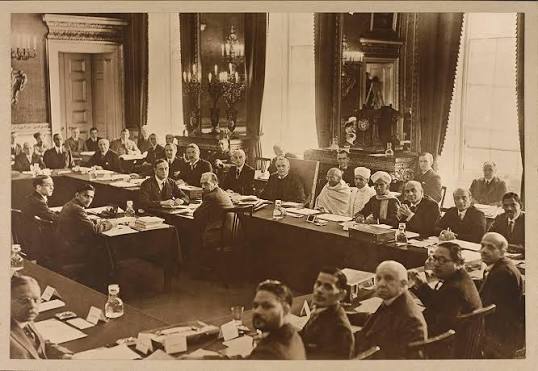
After this, the actual decision at the British level was made through the Round Table Conferences.
The First Round Table Conference was held in London from November 12, 1930, to January 19, 1931.
Muslim Representatives from UP and Punjab at the Round Table Conference
During the Round Table Conferences (1930–1932), the Muslim League and Muslim communities were represented by delegates from different provinces. In the context of the Sindh issue, important representatives from UP and Punjab included:
From Punjab
Sir Muhammad Shafi — a prominent leader of Punjab and an important Muslim League leader. He was a strong supporter of separate electorates.
Allama Muhammad Iqbal
Begum Jahan Ara Shahnawaz — a woman representative from Punjab
Raja Sher Muhammad Khan of Domeli — a leader associated with Punjab
From UP
Dr. Shafaat Ahmad Khan — an important Muslim delegate associated with UP
Maulana Muhammad Ali Jauhar
Hafiz Hidayat Hussain — a Muslim League representative from UP
Nawab Muhammad Ahmad Khan Chhatari of UP
The First Round Table Conference was also attended by Sir Shahnawaz Bhutto and Sir Ghulam Hussain Hidayatullah from Sindh.
Nine subcommittees were formed during the First Conference. Subcommittee IX, dealing with Sindh, was established. Its meetings were held on January 12, 13, and 14, 1931, at St. James’s Palace. The chairman was the Earl Russell.
The British members included the Marquess of Zetland and the Marquess of Reading. Muslim members included the Aga Khan, Muhammad Ali Jinnah (Bombay), Sir Shahnawaz Bhutto (Sindh), Sir Ghulam Hussain Hidayatullah (Sindh), Sir Abdul Qayyum (NWFP), Sir Muhammad Shafi (Punjab), and Dr. Shafaat Ahmad Khan (UP).
The non-Muslim members included Sardar Sampuran Singh (Sikh, Punjab), Dr. B. S. Moonje (Hindu Mahasabha), M. R. Jayakar, Raja Narendra Nath (Hindu, Punjab), C. Y. Chintamani (Liberal, UP), B. V. Jadhav, Sir Pheroze Sethna (Parsi), H. P. Mody, and Sir Hubert Carr (European).
Dr. Moonje was not a Sindhi. He was born in Bilaspur in the Central Provinces and was associated with the Hindu Mahasabha politics of Maharashtra/Nagpur.
It is worth noting here that the Hindus of Sindh entrusted a non-Sindhi Hindu Mahasabha leader, Dr. Moonje, with their representation because they considered him capable and believed that he would prevent the creation of the province, while the Muslim representatives of Sindh did not go alone; rather, they relied on some of the most capable minds of the Muslim League who were not Sindhis.
A majority of the committee accepted the principle of separation, provided that Sindh could stand on its own financially. Two members strongly opposed it: Dr. Moonje and Raja Narendra Nath, who represented the Hindus of Sindh and were supporters of an undivided “Mother India.” The Parsi member, Sir Pheroze Sethna, said that separation was acceptable but that Sindh should be financially self-sustaining.
Thus, even among the non-Muslim members, there was not complete agreement. Nevertheless, acceptance in principle emerged, subject to the financial condition.
The Second Round Table Conference (September 7 to December 1, 1931) advanced this principle further. Following the Third Conference (November–December 1932), the British government indicated its intention to incorporate the separation into the constitutional framework.
The Government of India Act of 1935 declared Sindh a Governor’s Province, and on April 1, 1936, Sindh became a separate province.
Timeline of the Creation of Sindh Province
Failed attempt in the Bombay Council — 1921
Aligarh — 1925
Delhi Muslim Proposals — 1927
Jinnah’s Fourteen Points — 1929
First Round Table Conference, Subcommittee IX — January 1931
Financial and administrative committees — 1931–34
Legal implementation — 1935–36
As Muslims, making Sindh a Muslim-majority province was part of the Muslim League’s agenda. The Hindus of Sindh were not in agreement because their political motherland was the whole of India.
After the creation of Pakistan, the question of “Dharti Maa” again collides with this history. Following the Lahore Resolution of March 23, 1940, the Sindh Assembly supported the establishment of a separate state for Muslims in 1943.
If the original “motherland” was united India—as many Hindus of Sindh argued when opposing separation—then that motherland was divided in 1947. The provincial existence of Sindh came into being eleven years before that partition through the efforts of the Muslim League and a British constitutional settlement.
To subsequently portray Sindh as the “motherland” in such a way that it replaces united India is contrary to the historical sequence: the province was created through the political struggle of Muslims; the Hindus opposed it because their motherland was all of India; and that India was eventually partitioned.
History does not say that Sindh had no linguistic or geographical basis for a separate identity. Rather, it says that an appeal based solely on identity, nationhood, and homeland was insufficient to create a separate province.
The province was created when the All-India Muslim League made it part of the constitutional rights of Muslims, when Subcommittee IX of the Round Table Conference approved the principle, and when the Government of India Act of 1935 provided the legal framework.
Those who today call Sindh “Dharti Maa” as though it were an eternal, indivisible entity that existed above and beyond the Partition of India have to confront this historical record: the separate province was created through the efforts of the Muslim League under the politics of a Muslim majority; the Hindus of Sindh opposed it because their motherland was the whole of India; and that India was ultimately partitioned.
Dr. Nadeem Rizvi,
MatrukaSindh Tehreek